How to Prepare for RMO 2026 – Complete Preparation Guide for Students
The Regional Mathematical Olympiad (RMO) is one of the most prestigious and competitive mathematics examinations in India. It is the second stage of the Mathematical Olympiad Programme and plays a crucial role in identifying students with exceptional mathematical reasoning and problem-solving abilities.
Conducted under the supervision of the Homi Bhabha Centre for Science Education (HBCSE), RMO serves as the gateway to advanced stages such as the Indian National Mathematical Olympiad (INMO) and ultimately the International Mathematical Olympiad (IMO). With structured preparation and the right strategy, students can significantly improve their performance in this examination.
What is RMO?
The RMO is a three-hour descriptive written examination consisting of six proof-based mathematical problems. Unlike objective or speed-based tests, RMO emphasizes logical reasoning, conceptual clarity, and rigorous proof writing.
Students are expected to present well-structured solutions, clearly justifying each step using mathematical definitions, properties, and theorems rather than short or direct answers.
To be eligible for RMO 2026, students must first qualify the Indian Olympiad Qualifier in Mathematics (IOQM), which serves as the preliminary screening stage of the Mathematical Olympiad Programme. Based on performance in RMO, selected students advance to the Indian National Mathematical Olympiad (INMO).
RMO Exam Pattern 2026
- Exam Level: Regional (State / Union Territory-wise)
- Mode of Examination: Offline (Pen and Paper)
- Duration: 3 Hours (180 Minutes)
- Total Questions: 6 descriptive, proof-based questions
- Answer Format: Step-by-step solutions with logical justification
- Marks: Each question carries equal weightage
RMO Eligibility Criteria
- Students must qualify the Indian Olympiad Qualifier in Mathematics (IOQM).
- Students studying in Classes 8 to 12 are eligible.
- Exceptionally talented Class 7 students may be permitted.
- Candidates must be Indian citizens or OCI card holders.
- Meeting the prescribed IOQM cutoff is mandatory to appear for RMO.
RMO Syllabus 2026 – Detailed Subject-wise Breakdown
The RMO syllabus is based on mathematics taught from Classes 8 to 12, but questions are framed to test logical reasoning, conceptual depth, and proof-writing skills rather than routine calculations.
Basic Mathematics
- Number system and properties of integers
- Basic inequalities
- Logarithms
- Modulus function
- Greatest Integer Function (GIF)
Algebra
- Inequalities and theory of indices
- Progressions: A.P., G.P., and H.P.
- Systems of linear equations
- Theory of equations and polynomials (one & two variables)
- Binomial theorem and properties of binomial coefficients
- Complex numbers
- Functional equations
- Sequences
Geometry
- Triangles, quadrilaterals, and polygons
- Circles and their properties
- Standard Euclidean constructions
- Concurrency and collinearity (Ceva’s and Menelaus’ theorems)
- Basic trigonometric identities
- Compound, multiple, and submultiple angles
- Sine rule and cosine rule
- Coordinate geometry: straight line, circle, conics
- Vectors and introductory 3-D geometry
Combinatorics
- Basic enumeration techniques
- Pigeonhole principle and applications
- Recursion
- Elementary graph theory
Number Theory
- Divisibility theory and Euclidean algorithm
- Greatest common divisor (GCD)
- Diophantine equations of the form ax + by = c
- Fundamental theorem of arithmetic
- Congruences and linear congruences
- Chinese Remainder Theorem
- Fermat’s Little Theorem and Wilson’s Theorem
- Euler’s Phi function and Euler’s generalisation of Fermat’s theorem
- Pythagorean triples and their properties
How to Prepare for RMO 2026 – Expert Strategy for Olympiad Success
Preparing for the RMO 2026 requires a structured and disciplined approach focused on conceptual clarity, proof writing, and problem-solving depth. Unlike routine exams, RMO demands mathematical maturity rather than speed.
- Strengthen Core Mathematical Fundamentals: Build a solid foundation in Algebra, Geometry, Number Theory, and Combinatorics before attempting high-difficulty Olympiad problems.
- Practice Multiple Problems on a Single Concept: Solving varied problems on the same topic improves flexibility and helps students recognize patterns commonly tested in RMO questions.
- Develop Proper Proof-Writing Skills: RMO answers are evaluated on logical structure. Students often lose marks due to incomplete reasoning or informal steps — click here to understand common mistakes students make in RMO and how to avoid them.
- Solve Previous Year RMO & IOQM Papers: Attempting past papers helps students understand the difficulty level, question patterns, and expected depth of solutions.
- Take Full-Length Mock Tests: Simulate real RMO exam conditions by solving papers within the 3-hour time limit to improve time management and question selection.
- Analyze Errors and Improve Continuously: Reviewing incorrect solutions and understanding conceptual gaps is essential for long-term improvement in Olympiad mathematics.
Best Books for RMO Preparation (Highly Recommended)
Selecting the right books is crucial for effective RMO preparation. The following resources are widely used by successful Olympiad students and provide both theory and high-quality problems.
- An Excursion in Mathematics – M.R. Modak, S.A. Katre, V.V. Acharya
- Problem Primer for the Olympiads – C.R. Pranesachar et al.
- Problem Solving Strategies – Arthur Engel
- Challenge and Thrill of Pre-College Mathematics – V. Krishnamurthy et al.
- Elementary Number Theory – David Burton
- 104 Number Theory Problems – Titu Andreescu & Dorin Andrica
- Geometry Revisited – H.S.M. Coxeter & S.L. Greitzer
- Functional Equations – B.J. Venkatachala
- Pathfinder for Olympiad Mathematics – Vikas Tiwari
Consistent practice using the right material, combined with regular self-analysis, plays a decisive role in qualifying for the Indian National Mathematical Olympiad (INMO).
Helpful External Resources for RMO & Olympiad Preparation
Below are trusted and authoritative resources that provide official information, preparation material, past papers, and expert guidance for RMO, IOQM, INMO, and higher Olympiads. These links also strengthen SEO and user trust.
- Official HBCSE Olympiad Page: https://olympiads.hbcse.tifr.res.in/
- RMO Official Information & Guidelines: https://olympiads.hbcse.tifr.res.in/mathematics/
- IOQM Official Website: https://www.mtai.org.in/
- Previous Year RMO Question Papers: https://olympiads.hbcse.tifr.res.in/olympiads/past-papers/
- INMO Past Papers & Solutions: https://olympiads.hbcse.tifr.res.in/olympiads/inmo/
- IMO Official Website (International Olympiad): https://www.imo-official.org/
- Art of Problem Solving – Olympiad Resources: https://artofproblemsolving.com/
- AoPS RMO & Olympiad Problem Archive: https://artofproblemsolving.com/community/c13_olympiads
- Brilliant.org Olympiad Practice: https://brilliant.org/practice/
- IMO Shortlist & Solutions Archive: https://www.imo-official.org/problems.aspx
- RMO Preparation Forum Discussions: https://artofproblemsolving.com/community/c6_contests
- Olympiad Mathematics Books Reference (Wikipedia): https://en.wikipedia.org/wiki/Mathematical_Olympiad
Using these high-quality external resources alongside structured coaching and regular practice significantly improves your chances of qualifying RMO 2026, progressing to INMO, and eventually reaching the International Mathematical Olympiad (IMO).
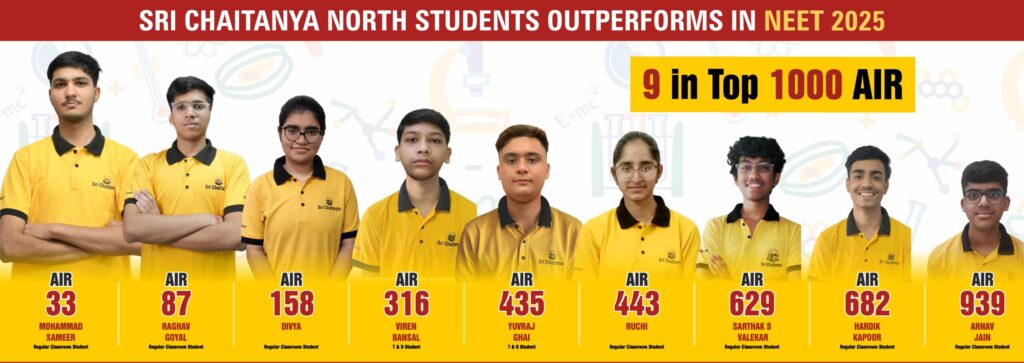
Explore Foundation & Olympiad Courses at Sri Chaitanya
Sri Chaitanya offers carefully structured Foundation and Olympiad programs designed to help students build strong academic fundamentals and develop a competitive mindset from an early stage.
With a strong emphasis on concept mastery, problem-solving skills, and guided preparation, these programs support students preparing for Olympiads, JEE, and NEET in a systematic and stress-free learning environment.
Early guidance, consistent practice, and expert mentorship make a lasting difference.